
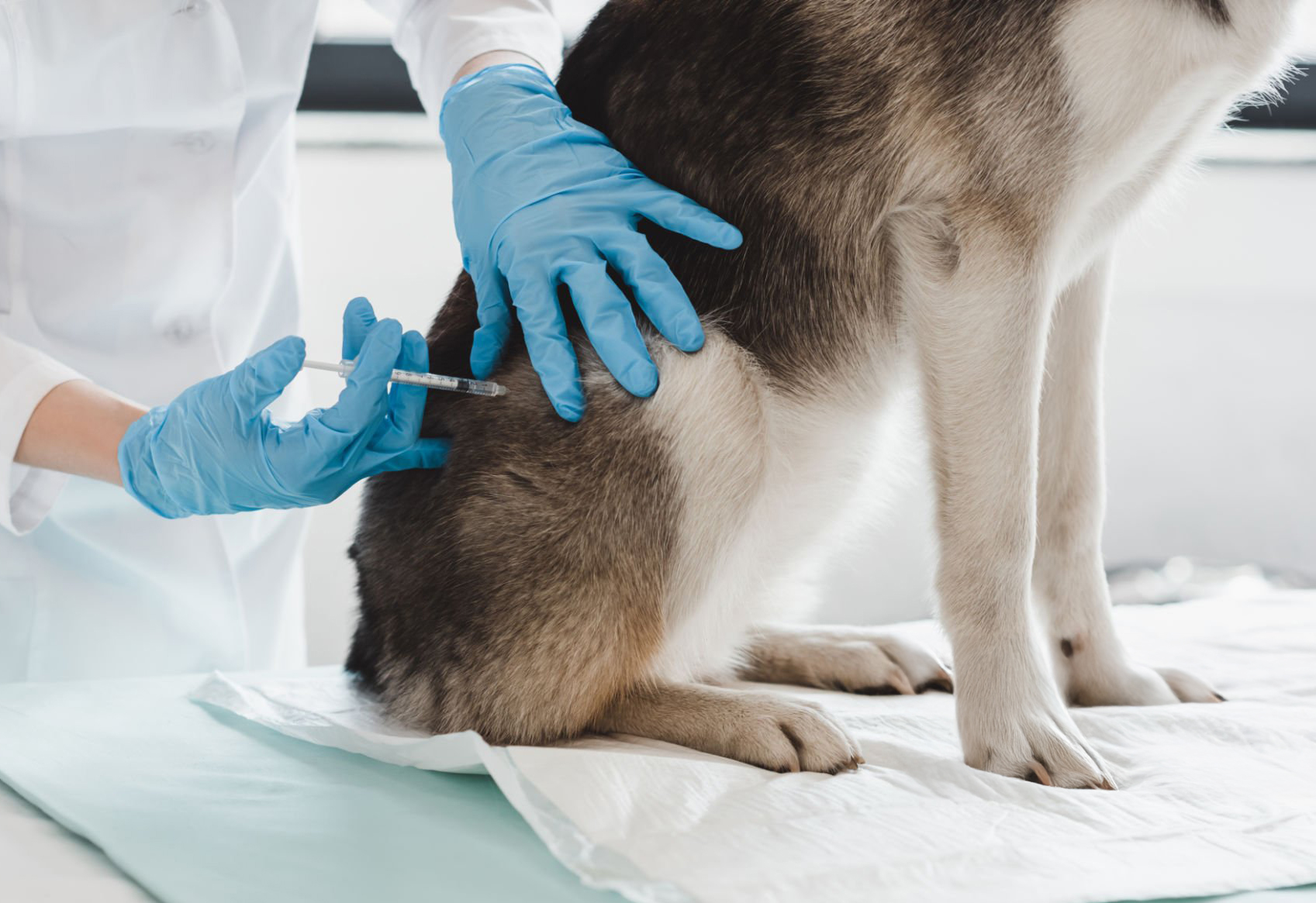
 Annual vaccinations are one of the most important preventative measures you can take for the health of your pet. Click here to see a list of recommended veterinarians in our area. At PAWS Shelter of Central Texas, we ensure that every dog is provided the following vaccinations:
DHPP or DAPP
- Canine Distemper – This is a highly contagious virus that can cause severe respiratory infection, vomiting, diarrhea, high fever, and seizures. The virus is transmitted via eye and nasal discharge, including respiratory droplets. Over 50% of affected dogs cannot be saved, even with aggressive medical treatment. Survivors of often left with significant neurological or other medical side effects. Distemper can be spread by other animals, including raccoons, skunks, foxes, and coyotes.
- Recommendation: Initially, puppies need a series of three to four vaccinations, administered one month apart, followed by yearly booster vaccination.
- Canine Hepatitis / Adenovirus – This virus attacks the liver and causes hepatitis with symptoms of nausea, vomiting, and diarrhea.
- Recommendation: Puppy series followed by yearly booster vaccination.
- Canine Parainfluenza – This virus causes severe upper respiratory infections.
- Recommendation: Puppy series followed by yearly booster vaccination.
- Canine Parvovirus – Parvovirus is one of the most lethal and common viruses in our area. The virus is resistant to temperature extremes and even commonly used disinfectants. This is a resilient virus that has been documented to survive in soil for more than seven years. Parvovirus attacks the lining of the intestinal wall causing severe diarrhea and vomiting. The damage it causes often leads to secondary infections that tax their bodies to the extreme and can prove fatal, even with aggressive treatment. The virus is highly contagious and is transmitted via infected fecal material. It can be carried on shoes, feet, fur, and clothing. Parvovirus can be spread by other animals, including raccoons, skunks, foxes, and coyotes.
- Recommendation: Puppy series followed by yearly booster vaccination.
BORDETELLA
- Bordetella – Also known as Kennel Cough, Bordetella is a bacteria that causes severe coughing as well as eye and nasal discharge. The disease is highly contagious via nasal secretions, including respiratory droplets.
- Recommendation: All dogs and puppies going into boarding kennels, day care, dog parks, or any other situations with close contact to other dogs should vaccinate every 6-12 months, depending on risk factors.
RABIES
- Rabies Virus – This virus attacks the nervous system of animals and humans. It is categorized as a zoonotic illness, meaning it is transmissible to all mammals. The virus is typically spread via saliva through bite or scratch wounds. Texas State law requires that all dogs be vaccinated annually against Rabies beginning at four months of age.
- Recommendation: Puppy should be vaccinated between 12-16 weeks old followed by an annual booster. If the dog is boostered within the correct timeframe, they can be eligible for three year booster vaccinations from that point on.
OTHER VACCINE CONSIDERATIONS
LEPTOSPIROSIS
- Canine Leptospirosis – Leptospirosis is a bacteria that causes impairment of normal kidney function and in severe cases can lead to kidney failure. The bacteria is transmitted in the urine of infected animals, such as dogs, cattle, rats, and deer.
- Recommendation: Puppy series followed by yearly booster vaccination.
RATTLESNAKE
- Rattlesnake Vaccine – The rattlesnake vaccine for dogs can provide some protection against rattlesnake bites, but it is important to weigh the benefits and risks before making a decision. Consult with your veterinarian to determine if the vaccine is right for your dog.
- Recommendation: Two initial injections, one month apart followed by a booster shot every 6-12 months, depending on risk factors.
 Heartworm disease occurs in all 50 states so all dogs require preventative medication to ensure they stay safe. Texas is ranked #3 in heartworm infection in the United States.
This fatal disease is spread via mosquito bites, which as any Texan knows, are highly prevalent and practically unavoidable – even indoors.
Fortunately, there are many types of heartworm prevention offered by your veterinarian. We recommend speaking with your vet to find out which type of prevention works best for your dog and your family.
How Do Dogs Get Heartworms?
All dogs can be infected with heartworms regardless of age, location, or the time of year. It is critical that you protect your dog with a veterinarian approved heartworm prevention.
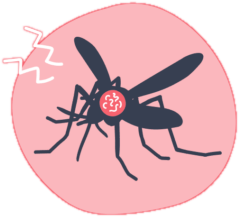
A mosquito bites an animal infected with heartworm disease, ingesting baby worm larvae (microfilaria).
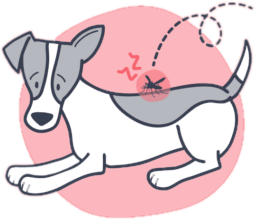
The infected mosquito then bites your dog, transmitting the larvae into their bloodstream.

The larvae continues to grow and multiply in the dog's heart and lungs. Adult worms can reach twelve inches in length!
How Do You Treat Heartworms?
All dogs can be infected with heartworms regardless of age, location, or the time of year. It is critical that you protect your dog with a veterinarian approved heartworm prevention. At your annual veterinary exam, your veterinarian will recommend heartworm testing.
If your dog tests positive for heartworm infection, there is only one approved treatment option. This treatment is lengthy, extremely painful, and expensive. Unfortunately, without treatment, your dog will eventually succumb to the infection which will result in heart and lung failure. This is why we insist adopters keep their dogs on heartworm prevention year round.
GIVE THEM TIME TO DECOMPRESS AND ADJUST
Being prepared is important and you may find that your dog adapts to a new life smoothly. However, it’s rare that you won’t hit a few bumps in the road. Once you bring your new dog home, the best thing you can do is give them some time to get used to the new surroundings by supporting them one day at a time. It’s easy to get caught up in the excitement of having a new dog or puppy. Your heart may be filled with visions of all the fun and wonderful activities that you will enjoy together. Perhaps you will fulfill these visions at some point in the future, but one of the biggest mistakes you can make with a rescue dog is expecting too much too soon.
KEEP IN MIND: For a dog entering a new home, there are multiple new stimuli bombarding the dog’s senses at once. There’s the strong smell of household cleaners, pounding of children’s feet running around, lights reflecting off the floor, an unexpected image of a dog in a full-length mirror, and the sound of a skateboard rolling down the driveway.
REMEMBER: New routines have to be learned including where to sleep, when to eat, what to play with, what not to chew on, and where to go potty. The humans usually don’t make it any easier by changing their minds several times before finally settling on a system. In addition to adjusting to a new environment and learning routines, dogs are integrating themselves into a new social group. The process includes learning how to communicate and developing relationships with individual group members, each fairly daunting tasks on their own. Keep in mind that dogs who are recovering from physical or emotional trauma may also need additional time to heal.
REST ASSURED: Starting off on the right foot can make a huge difference. To help make the transition go as smooth as possible, it is important to give your rescue dog time to decompress once they are home. Allow the dog’s nervous system the time it needs to recover from stress and process the rapid changes they are going through.
Once confident that your dog is fitting into their new home and ready to take on a new challenge, it is highly recommended that all new adopters seek training classes from a professional trainer that utilizes positive reinforcement techniques to form a lasting bond with your new dog.


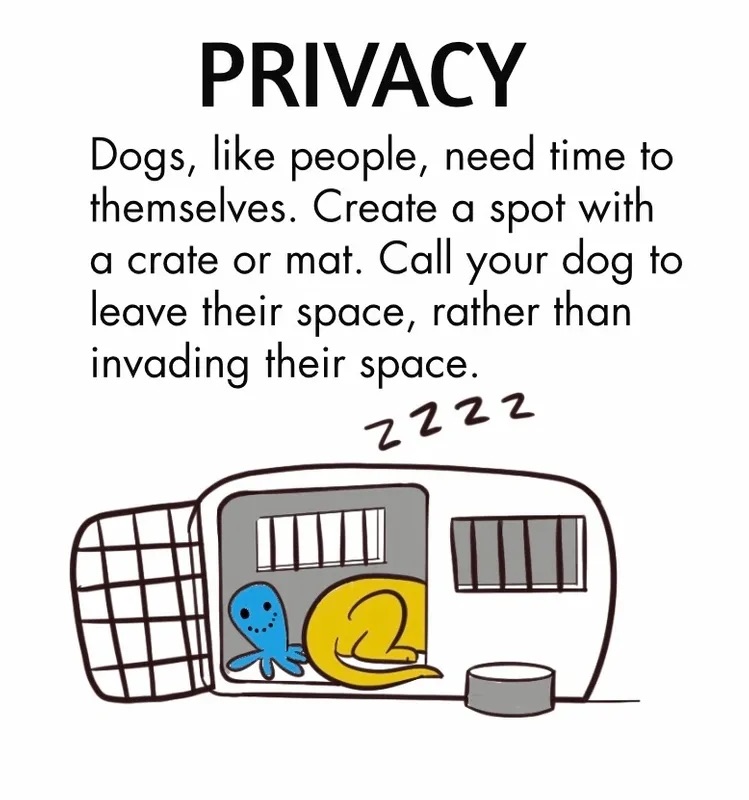
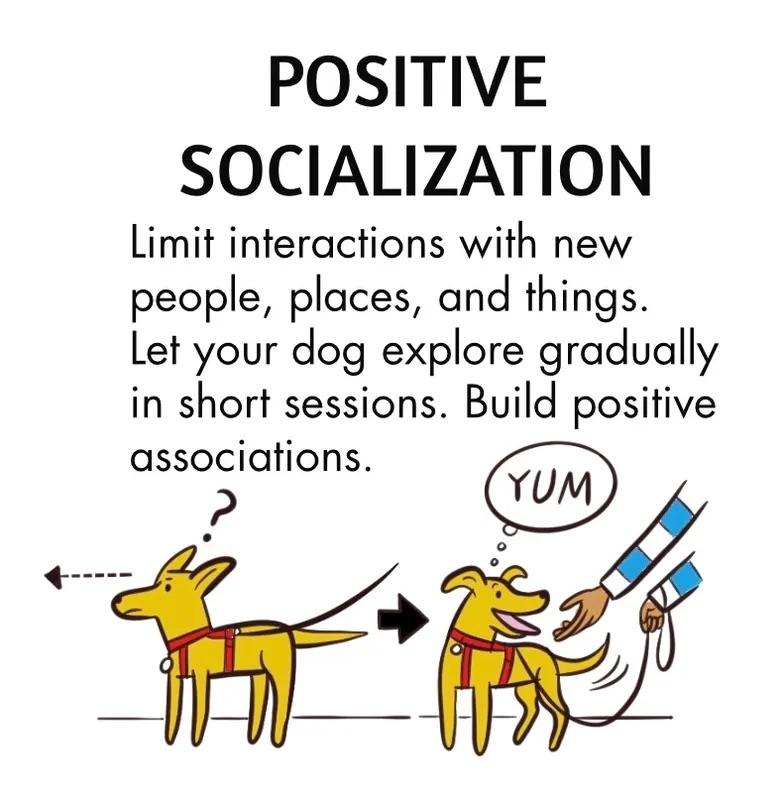
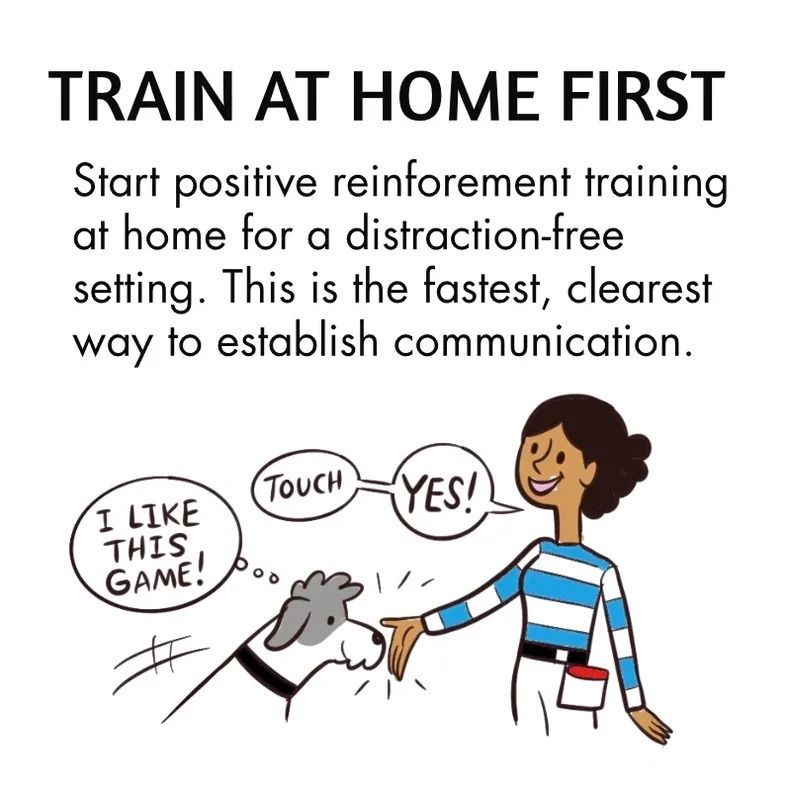
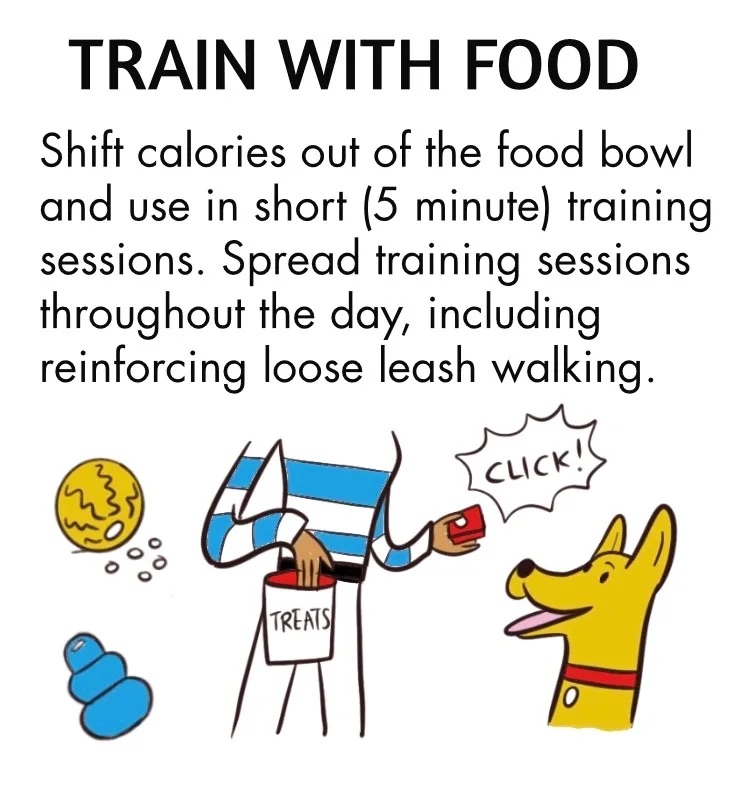
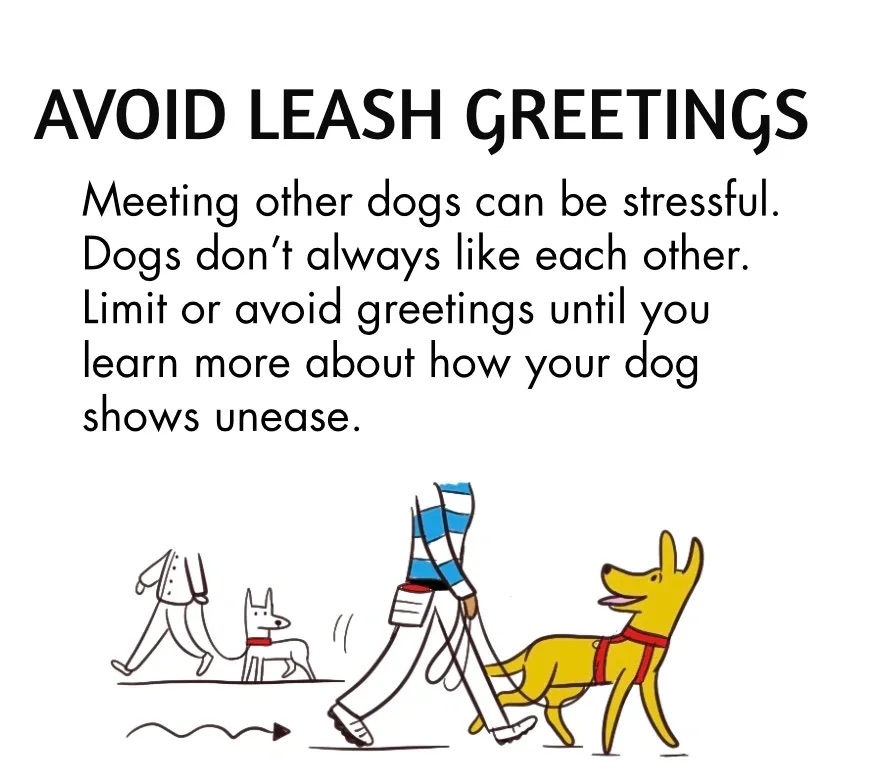
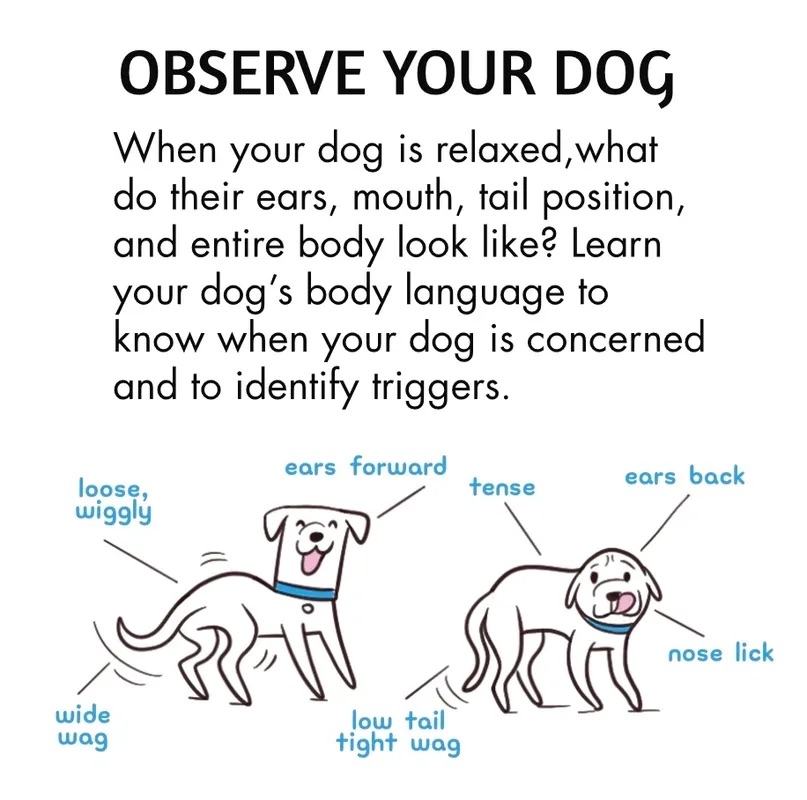
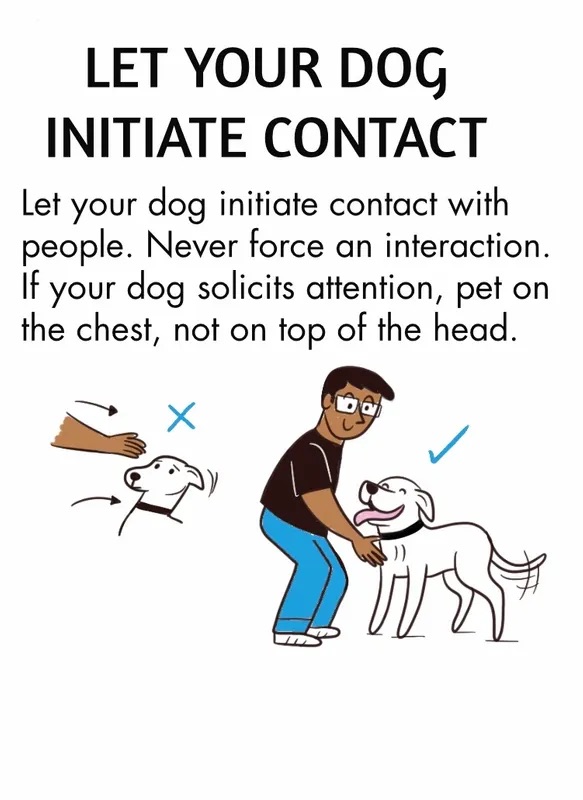

Keeping your dog well socialized with people and other dogs is a crucial part of responsible pet ownership. It's easy to forget how small their world really is, so we must make efforts to keep our dogs well-adjusted in new environments and around new people or pets. Socializing your dog involves positively exposing them to new people, places, sounds, and other dogs to help them become well-adjusted, confident, and calm in various situations, which is done through gradual introductions, positive reinforcement, and controlled, positive experiences rather than forcing them into overwhelming situations.
The greatest window of learning in a dog’s life starts around 3 weeks of age and closes between 16 and 20 weeks. This period allows puppies to be exposed to a wide variety of sights, sounds, smells, and sensations without becoming fearful. Puppies who miss out on these experiences may never learn to be comfortable around unfamiliar things, paving the way for anxiety, fear, and aggression later on in life. Follow these steps to give your puppy the best start possible:
Handling
Young puppies should be cuddled and handled daily by as many different people as possible. Keep the contact gentle and pleasant for the puppy. Hold the puppy in different positions, gently finger her feet, rub her muzzle, stroke her back and sides, look in her ears.
Sounds
Acclimate your puppy to lots of different sounds, being careful not to overwhelm him with too much noise too fast. Expose him to kitchen sounds, telephones ringing, children playing, sportscasters yelling on TV, radios playing, buses moving by, and so on.
Food bowl exercises
Teach your puppy to enjoy having people approach her bowl while she’s eating. This will help to prevent resource guarding, which occurs when dogs feel anxious about others approaching their own valued resources. Walk up to your puppy while she’s eating her food, drop an even tastier treat into her dish, and walk away. Repeat once or twice during each meal until your puppy is visibly excited about your approach. Then walk up, physically pick up her dish, put in a treat, give the dish back, and walk away.
Teach your puppy to be alone
Puppies should learn to tolerate being completely separate from other people and animals every day to avoid developing separation anxiety. Learn more about preventing separation anxiety in puppies.
Prevent aggression
There’s no need to show the dog who’s boss or try to dominate him. Confrontational approaches like pinning your dog down or scruffing him frequently backfire and create the aggression dog owners seek to avoid. Focus on rewarding correct behavior and preventing undesirable behavior to teach your puppy human rules and build a trusting relationship.
Introduce your puppy to new people
Introduce your puppy to several new people every day, keeping the interactions pleasant and unthreatening. Focus especially on setting up pleasant encounters with unfamiliar men and well-behaved children.
Prevent biting
Provide appropriate toys to redirect your puppy’s biting. When your puppy bites too hard during play, making a sudden noise (“Ow!”) and end the game to help him learn to use his mouth gently. Never squeeze your puppy’s mouth shut, yell at him, or hold him down. This will frighten him and likely make biting worse. Note that while puppies under five months tend to explore the world with their mouths, dogs past this age are considered adolescents and should no longer be play biting.
Though a dog’s sensitive period of socialization typically ends around 4-5 months old, we recommend continuing to socialize your dog for at least the first year of their life.
Keep introducing your dog to new people
Dogs only remain social when continually exposed to unfamiliar people. Continued pleasant exposure to new people keeps the idea that strangers are good news in the forefront of your dog’s mind.
Keep introducing your dog to other dogs
There are lots of ways to do this: dog parks, play groups, play dates with friends’ dogs, and simple leash walks can all help accomplish this. Without this experience, dogs can lose their ability to know how to behave appropriately around other dogs.
Vary your walks
Try to avoid taking the same walking route every day. Let your dog experience a variety of environments, from sidewalks to dirt roads. This will provide your growing dog with much-needed mental stimulation.
Teach your dog to be alone
Scheduling daily alone time with neither people nor other pets nearby is critical to preventing separation anxiety. Use a baby gate or crates to prevent your dog from shadowing you constantly when you’re home. Ask a friend to pet sit for an hour regularly.
Don’t punish fear
Most displays of aggression are the result of fear. Many owners are caught off guard when their normally easygoing pup reacts fearfully to a new dog or person. However, this change often coincides with the end of the sensitive period of socialization. Starting around 5 months old, your dog may start to interpret anything unfamiliar as a threat and will typically either flee or confront what frightens him. Punishing this reaction will only confirm his fear, so instead remove your dog from the situation and ask for a different behavior (like “sit”).
Continue handling your dog
Make sure your dog is comfortable with different parts of his body being handled. This will ensure that if he must be handled in an emergency he will be less likely to bite. Be on the watch for a stiff body, whites of the eyes showing, a closed mouth, and escape attempts. If you see these signs, stop handling your dog.
“I need to socialize my three-year-old dog. How do I do that?” We hear this question frequently because owners want to give their dogs the fullest life possible, which many assume includes play with other dogs. In reality, adult dogs can lead perfectly happy lives without visits to the dog park or off-leash play.
Play in puppies vs. adult dogs
Off-leash play is beneficial to puppies learning behavior cues, but the same practice can have detrimental effects on adult dogs. While there are exceptions, when dogs reach social maturity between ages one and three, they often no longer enjoy playing with large groups of unfamiliar dogs. They may either attempt to avoid the dogs, stand close to their human family, or even growl and snap at boisterous young dogs that come too close to them. This behavior is often misidentified as abnormal, when in fact it is quite common.
Setting up playtime for your adult dog
If your heart is set on social time with other dogs, start by introducing your dog to one dog at a time. Invite a friend to bring her gentle, easygoing dog on a walk with you and your dog. Allow a polite distance between dogs while they get accustomed to each other. If both dogs appear relaxed throughout the walk, allow them to sniff each other briefly. Keep leashes loose and each interaction short. If either dog appears to be tensing up, call the dogs apart with pleasant, relaxed voices. If both dogs’ bodies appear loose and tails are wagging, consider an off-leash session in one of your fenced yards with leashes dragging, using the same short sessions and reinforcement for relaxed behavior.
Dealing with leash aggression in your adult dog
If your dog lunges, pulls toward or barks at other dogs on walks, you know how stressful and embarrassing it can be. Learn more about the causes and prevention of leash aggression.
Crate training is one of the single most helpful training tools a new dog owner can utilize. Contrary to what you may think, crates are not a punishment for dogs and can actually provide them with a sense of safety and comfort, if trained correctly.
Here are some key steps to safely and successfully crate training your new best friend.
STEP 1:
Introduce your dog to the crate
Place the crate in an area of your house where the family spends a lot of time, such as the family room. Put a soft blanket or bed in the crate. Take the door off or keep it propped open and let your dog explore the crate at their leisure. Some dogs will be naturally curious and start sleeping in the crate right away. If yours isn't one of them:
- Bring them over to the crate and talk to them in a happy tone of voice. Make sure the crate door is open and secured so that it won't hit your dog and frighten them.
- Encourage your dog to enter the crate by dropping some small food treats nearby, then just inside the door, and finally, all the way inside the crate. If they refuse to go all the way in at first, that's OK; don't force them to enter.
- Continue tossing treats into the crate until your dog will walk calmly all the way into the crate to get the food. If they aren’t interested in treats, try tossing a favorite toy in the crate. This step may take a few minutes or as long as several days.
STEP 2:
Feed your dog meals in the crate
After introducing your dog to the crate, begin feeding them their regular meals near the crate. This will create a pleasant association with the crate.
- If your dog is readily entering the crate when you begin Step 2, place the food dish or interactive puzzle toy stuffed with food all the way at the back of the crate.
- If they remain reluctant to enter, put the dish only as far inside as they will readily go without becoming fearful or anxious. Each time you feed them, place the dish a little further back in the crate.
- Once your dog is standing comfortably in the crate to eat their meal, you can close the door while they’re eating. The first time you do this, open the door as soon as they finish their meal. With each successive feeding, leave the door closed a few minutes longer, until they’re staying in the crate for 10 minutes or so after eating.
- If they begin to whine to be let out, you may have increased the length of time too quickly. Next time, try leaving them in the crate for a shorter time period.
STEP 3:
Practice with longer crating times
After your dog is eating their regular meals in the crate with no sign of fear or anxiety, you can confine them there for short periods of time while you're home.
- Call them over to the crate and give them a treat.
- Give them a voice cue to enter, such as “crate.” Encourage them by pointing to the inside of the crate with a treat in your hand.
- After your dog enters the crate, praise them, give them the treat and close the door.
- Sit quietly near the crate for five to 10 minutes and then go into another room for a few minutes. Return, sit quietly again for a short time and then let them out.
- Repeat this process several times a day, gradually increasing the length of time you leave them in the crate and the length of time you're out of sight.
- Once your dog will stay quietly in the crate for about 30 minutes with you mostly out of sight, you can begin leaving them crated when you're gone for short time periods and/or letting them sleep there at night. This may take several days or weeks.
STEP 4, Part A:
Crate your dog when you leave
After your dog can spend about 30 minutes in the crate without becoming anxious or afraid, you can begin leaving them crated for short periods when you leave the house.
- Put them in the crate using your regular command and a treat. You might also want to leave them with a few safe toys in the crate.
- Vary the moment during your “getting ready to leave” routine that you put your dog in the crate. Although they shouldn't be crated for a long time before you leave, you can crate them anywhere from five to 20 minutes prior to leaving. A consistent routine helps your dog feel more secure and understand when it's time to settle down.
- Don't make your departures emotional and prolonged—they should be matter-of-fact. Praise your dog briefly, give them a treat for entering the crate and then leave quietly.
When you return home, don't reward your dog for excited behavior by responding to them in an enthusiastic way. Keep arrivals low-key to avoid increasing their anxiety over when you will return. Continue to crate your dog for short periods from time to time when you're home so they don't associate crating with being left alone.
STEP 4, Part B:
Crate your dog at night
Put your dog in the crate using your regular command and a treat. Initially, it may be a good idea to put the crate in your bedroom or nearby in a hallway, especially if you have a puppy. Puppies often need to go outside to eliminate during the night, and you'll want to be able to hear your puppy when they whine to be let outside. Older dogs should also initially be kept nearby so they don't associate the crate with social isolation.
Once your dog is sleeping comfortably through the night with the crate near you, you can begin to gradually move it to the location you prefer, although time spent with your dog—even sleep time—is a chance to strengthen the bond between you and your pet.
FINDING THE RIGHT SIZED CRATE
STEP 1: Measure Length

Measure your dog from the tip of their nose to the base of their tail while they’re standing.
STEP 2: Measure Height
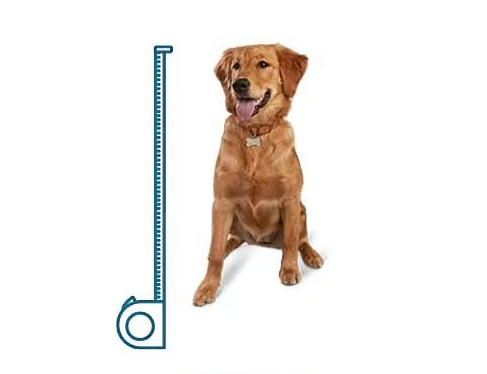
Measure your dog from the top of their head to the floor while they’re sitting.
STEP 3: Add 4 Inches
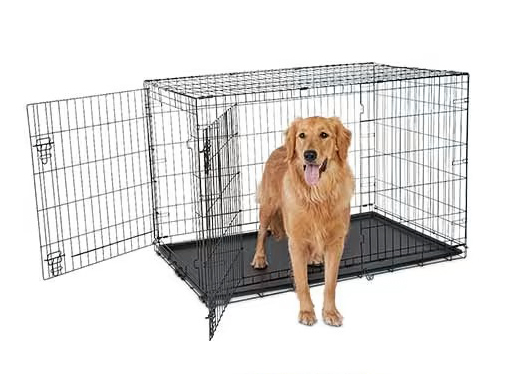
Add 4 inches to your dog’s length and height measurements; use those numbers to find the right crate dimensions when shopping.
If shopping for a puppy, remember that they will grow! Expect to buy a larger crate as they get bigger, or use their approximate adult size to estimate the correct crate size and look for an option with a divider that can grow with your puppy.

Separation anxiety can happen for a multitude of reasons, but you can work towards a solution with patience and positive reinforcement of good behaviors.
A word of caution: before labeling your dogs “bad behaviors” as separation anxiety, have them examined by your veterinarian to rule out any potential medical issues that could be causing your dog to act out.
Possible Symptoms of Separation Anxiety:
If your pet displays any of these symptoms when left alone, they could have separation anxiety.
- Howling, crying, or barking.
- Urinating or defecating indoors, especially in uncommon areas.
- Chewing, digging, and other destructive behaviors.
- Escaping.
- Pacing.
Tips for Reducing Separation Anxiety:
- Help your pet associate being alone with something good. For dogs, try offering a food dispensing toy every time you leave the house. This will give them something positive to focus on and help tire them out.
- If you notice that your pet gets anxious as you prepare to leave, you may have inadvertently “trained” them to beg for attention by giving them long, theatrical goodbyes. It is completely acceptable to ignore your pet 5-15 minutes before leaving and also when returning. This will show them that your absences are nothing to get excited about.
- Try picking up your keys, putting on your shoes and coat, then just sit down and watch TV or read a book instead. this may work, over time, to lower your dog's pre-departure anxiety.
- Employ a dog walker to give your pet some exercise or attention while you are at work.
- Take your dog to doggy daycare a couple times a week to play with other dogs.
- Make sure your pet is getting enough playtime, mental stimulation, and exercise while you are at home. For example, most dogs need at least 30 minutes of physical exercise per day (sometimes more) and the same for mental stimulation, such as training time or games.
- Enroll your dog in training classes. Pets need mental exercise. Training them to obey commands and learn tricks helps fulfill this need.
- Try utilizing a ThuderShirt. Use it anytime your pet is anxious. The tight fitting garment is designed to help relieve stress and anxiety in dogs.
- Anti-anxiety medications are also available, so ask your veterinarian if your pet would benefit from this type of help.
Despite the stereotype of “fighting like cats and dogs”, many dogs learn to live peacefully with cats – puppies and adults alike. The most important thing for adopters to know is that this adjustment is a process, not a one-time introduction. Care must be taken to introduce dogs and cats slowly, making the process as stress-free and pleasant as possible. Adopters must then be prepared to manage their pets' interactions for the next several weeks, if not longer, to ensure the safety of all involved.
While careful introductions are the best way to set your pets up for success, there is no guarantee that your cat and dog will become buddies. Some pets learn to tolerate each other, while others might attempt to cause each other harm. The outcome will depend on the manner of the pets' introduction and their individual personalities. The following steps can help to maximize your chances of long-term success.
- Keep the pets separate for the first 3-4 days. Some families confine their cat in a sanctuary room (i.e. bathroom, spare room, etc.) with the door closed and others confine each pet to a separate floor of their house. The goal is to allow the pets to get used to each other's presence and scent without face-to-face contact. Even if they can't see each other, they can hear and smell each other.
- While the pets are still separate, begin to feed them on opposite sides of a closed door. The idea is to teach them to associate the presence of the other pet with pleasant things, such as food. With each feeding, move their food bowls a little closer the closed door; continue the process until each pet can eat call right next door.
- When the pets can eat their food calmly right next to the door, begin face-to-face meetings. Keep the first few sessions short and calm. Keep the dog on a leash and let the cat come and go as they please. Do not restrain either pet in your arms as this could lead to injuries if either pet becomes scared or aggressive. Ask the dog to sit and reward them with small, tasty treats for calm behavior. You can offer treats to the cat as well. If either pet demonstrates aggression, calmly distract and redirect them using a toy or treat. If the situation escalates quickly, you can use a towel or blanket to safely corral the cat out of the room. Be sure to reward your dog whenever he responds by making eye contact with you when calling his name. Return the pets to their separate areas.
- If the pets did not react in a highly aggressive way, repeat these face-to-face sessions daily. If the cat attempts to leave the room, allow them to do so, and do not let the dog chase.Try to end each session on a high note, before either pet shows signs of stress or aggression. These meetings should take place in a “common area” of the house. It is not recommended to use either pets' sanctuary space.
- When both animals appear to be getting along well, allow them loose in the room together, keeping the dog's leash attached and dragging on the floor. This will allow you to step on it and prevent the dog from chasing the cat if they get excited. If tension erupts between them, go back to the earlier introduction steps and repeat the process. Make sure the cat has access to a dog-free area at all times, complete with a litter box. Continue to keep the pets separate when you are not home or sleeping at night until you are certain they will be safe alone together.